How To Find A Password For A Mac
How to Find WiFi Password on Mac Computers As you travel with your Mac laptop, you log into various WiFi networks to stay online so you can remain productive or entertained. After a while, your Mac becomes sort of a digital keychain with passwords to wireless networks spread all over the city. This one is for all those times someone asked you for a Wifi password your Mac has saved but you don't remember. At your home, a coffee shop, or an office.
Recently I had to reset my iPhone to fix a miscellaneous bug. When the device restarted, I wanted to reconnect it to the Wi-Fi network.
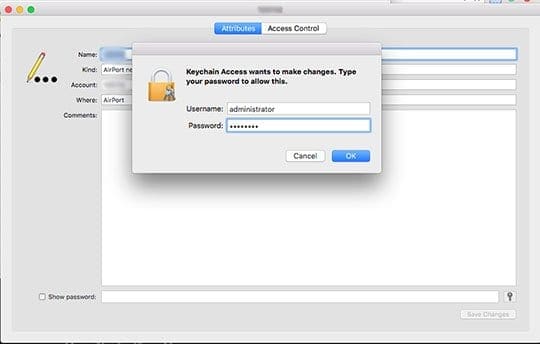
If you would like to find more password management options, open the Mac App Store, and search for the phrase “password.” If any of the apps look interesting, be sure to check the manufacturer's website; many times they include demos that aren't available from within the Mac App Store. Check your router’s default password, usually printed on a sticker on the router. In Windows, head to Network and Sharing Center, click on your Wi-Fi network, and head to Wireless Properties > Security to see your Network Security Key. On a Mac, open Keychain Access and search for your Wi-Fi network name. Core keygen mac. Follow these steps in order to find Wifi password on your Mac: Step-1: Firstly open Spotlight search and type KeyChain Access in it. Keychain Access window will open then.
Unfortunately, I couldn’t remember the Wi-Fi password. But just before I could think of taking the long route, my ever-reliable Mac came to my rescue. It hardly took a few steps to find the WiFi password using Mac. The “Keychain Access” for macOS has long been a highly useful password management system. The app stores all of your passwords for apps, servers, and websites. Besides, it can also store your credit card numbers or personal identification numbers (PINs) for bank accounts. So if you ever happen to forget password or important information, you can ring in this handy password manager to get out of the conundrum!
Hi, In Applications/Utilities open the Keychain Access item Select the Login item top Left Select Passwords bottom left Now find the listing for the mail account in the right hand pane. Double click it to open the info panel Place a tick in the Show Password tick box.
You will be asked for your Login Password and to click the Allow Once button. The password should now appear in the text field next to the Show Password box. 9:00 pm Wednesday; January 1, 2014 iMac 2.5Ghz 5i 2011 (Mavericks 10.9) G4/1GhzDual MDD (Leopard 10.5.8) MacBookPro 2Gb (Snow Leopard 10.6.8) Mac OS X (10.6.8), Couple of iPhones and an iPad. Hi, In Applications/Utilities open the Keychain Access item Select the Login item top Left Select Passwords bottom left Now find the listing for the mail account in the right hand pane. Double click it to open the info panel Place a tick in the Show Password tick box.
For android application “Subtitle Editor Free” and “Subtitles Time Editor” are some for the subtitle editor software. For Mac Os “Submerge for Mac”, “Subs Factory” and “FinalSub” are some of the subtitle editor software. More Subtitle Maker Software for Windows, Mac and Android Platforms “Tagger”, “PlanoRoll” and “The Grand 2” are some of the popular subtitle maker software for Mac Os version. For Windows version the other popular subtitle maker software are “Ninsight”, “Ayato”, “Poliscript” and “Titlebee”. It is known to all that Mac doesn’t provide as many subtitle tools as Windows. Comparatively speaking, to find an appropriate subtitle program for Mac is not as easy as on Windows. Among all subtitle toolsets I tried in all my years, I should say this software is really one of my favorites. It is the best subtitle maker if it is used for text based subtitle formats that can be transmitted as a single file. Using this professional tool, you can automatically create subtitles in the most accurate and efficient way without even the use of scripts. Free download subtitle maker.
You will be asked for your Login Password and to click the Allow Once button. The password should now appear in the text field next to the Show Password box. 9:00 pm Wednesday; January 1, 2014 iMac 2.5Ghz 5i 2011 (Mavericks 10.9) G4/1GhzDual MDD (Leopard 10.5.8) MacBookPro 2Gb (Snow Leopard 10.6.8) Mac OS X (10.6.8), Couple of iPhones and an iPad. Thanks Ralph, that got me where I want to go. However, in the process I screwed things up worse.
After getting the password I needed I notice there were 2 listed for the same site. One was outdated so I deleted it. Well, somehow I deleted the entire keychain except for one entry for the time capsule.
I thought no problem as I don't use the keychain anyway. But now it won't let me send email. I put in the password (that I now have found) and it will send mail. I clicked the save in keychain box but it doesn't get to the keychain. After sending a few test emails, entering the password each time it refuses to send more. I get a box headed 'Cannot send message using the server Cent outgoing.' I tried manually entering the password in my keychain but that didn't help.
Any ideas on what I've done? Can I find my keychain in time machine? HI, Open a Finder Window. Now use the Go Menu whilst holding down the ALT key.
The Library should appear in the menu list. Navigate to the Keychains folder. This should contains at least the Login keychain. (possibly some database items and a Microsoft one) Note I also use the Show Path Bar (Finder > View Menu) that shows where I am in relation to the top level of the Hard Drive. Highlight the Login item I have done. Now use the CMD and i Keys together (Or Right Click > Get Info) In the Info Panel that appears scroll to the bottom. Highlight your name and then use the Cogwheel type icon in the bottom bar.